Building the
Autonomous
Factory for Space

Robots, humanoids, and AI working together to construct the future of launch infrastructure. Our vision: A Fully Autonomous Starbase Factory.

Scroll

All robots
controlled under one common brain

We have assembled the foundation of an autonomous industrial workforce — robots and AI that think, move, and build in coordination. Together.

Logistics Robot
Purpose-built for autonomous transport and materials handling across industrial environments and launch facilities.
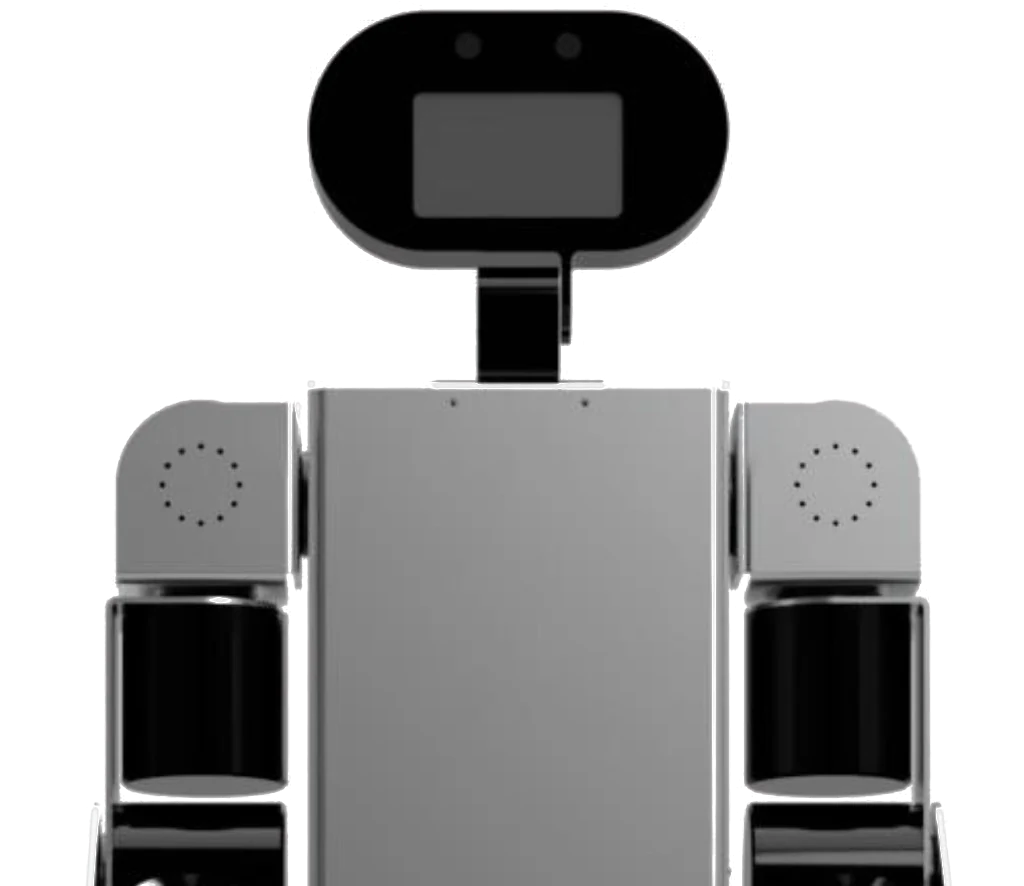
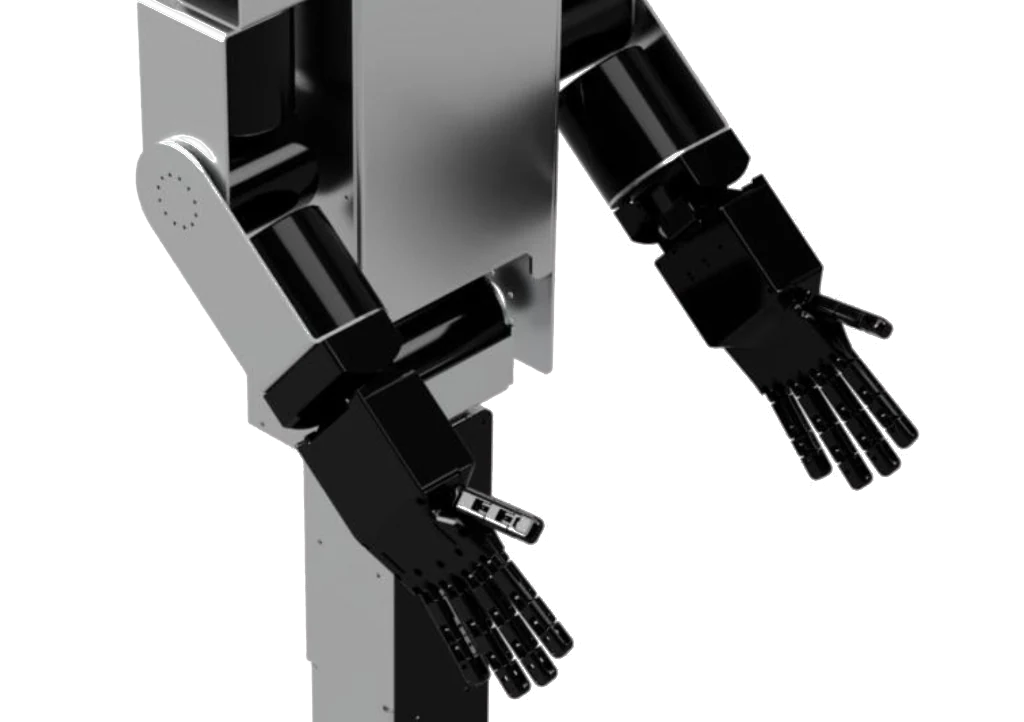
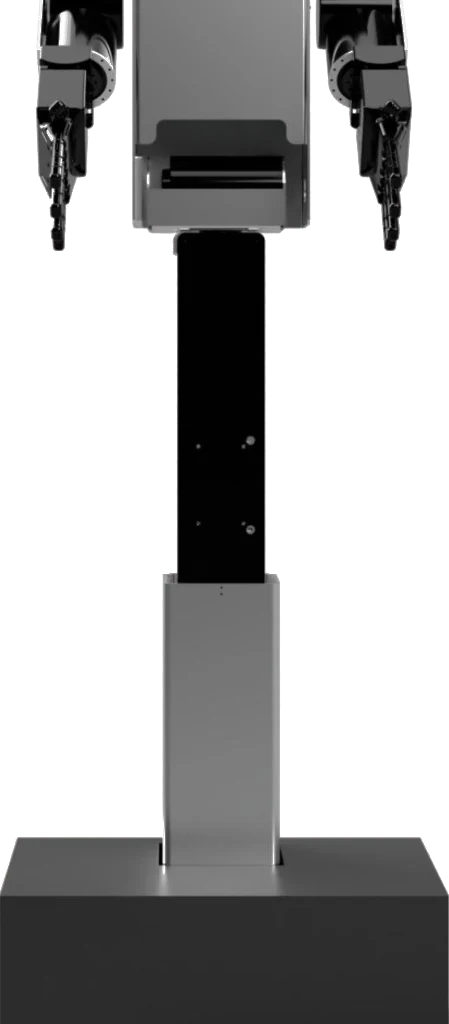
Humanoid Robot
A general-purpose humanoid capable of complex assembly tasks, engineered for the demanding tolerances of aerospace manufacturing.
AI Coordination System
An AI that orchestrates both robots in real-time — unified perception, planning, and execution across the entire autonomous workforce.

A Fully Autonomous
Starbase Factory

We are building a future where large rockets, launch pads, and space infrastructure are constructed, managed, and scaled entirely by robots and AI and no longer bottlenecked by human coordination, labor constraints, or slow construction cycles.

$5–10B
Development Cost of Starship
Building the next generation of launch systems at current efficiency is harder, slower, and far more capital-intensive than it needs to be.
1000×
Target Efficiency Gain
By automating construction, logistics, and coordination, we believe it is possible to dramatically reduce cost and time required to build large-scale launch systems.
24/7 Autonomous Output
Autonomous factories do not sleep, do not fatigue, and do not require coordination overhead. Factory output becomes an always-on capability.
3
Core Systems Built
A logistics robot, a humanoid robot, and a unified AI coordination system — the three pillars of an autonomous industrial workforce for space manufacturing.
Why Now

Because the economics
of space demand it

Launch vehicles are extraordinarily expensive to build

The development cost of Starship alone is estimated at $5–10 billion. Without major leaps in efficiency, developing the next generation becomes harder and far more capital-intensive.

AI and robotics can change the equation

By automating construction, logistics, and coordination across the full factory stack, we believe it is possible to improve efficiency by orders of magnitude and dramatically reduce cost and time.

The technology is ready — the factories are not

The convergence of capable humanoids, autonomous logistics, and coordinating AI has arrived. Now we are putting these systems together for industrial scale output.

Mars Launch Window 2027 Next Window 2029 Launch Windows Do Not Wait Autonomous Factories Mars Launch Window 2027 Next Window 2029 Launch Windows Do Not Wait Autonomous Factories

Launch windows
do not wait

Space development is not only expensive — it is time-sensitive. For interplanetary missions, launch windows are limited and precisely timed.

If a major Mars launch window is missed in early 2027, the next opportunity does not arrive until early 2029. A two-year delay is unacceptable for the future of space civilization. We believe autonomous factories will make sure humanity never misses critical launch windows simply because we could not build fast enough.

Mars Launch Window — Early 2027
Days
Hours
Mins
Secs

Until Mars launch window opens. Miss it, and humanity waits until 2029.

Demonstrate robots
building a rocket

Every large vision starts with a clear proof point. Our first milestone as a startup is to demonstrate robots building a small functional rocket — the first step toward proving that coordinated robots and AI can handle real-world assembly tasks that scale to launch infrastructure and beyond.

→ 01
Robot-built rocket Coordinated humanoid and logistics robot assemble a small-scale rocket from components. First proof of real-world assembly.
→ 02
Full factory prototype Autonomous cell capable of iterative, uninterrupted production cycles without human intervention.
→ 03
Starbase-scale deployment Launch infrastructure construction, managed and operated by autonomous systems.
Milestone 01 — In Progress
Vision

From one robot-built rocket
to autonomous space infrastructure

Today, the goal is a working demonstration. Tomorrow, it is autonomous manufacturing for the space age. We are building the systems that turn factory construction, rocket infrastructure, and launch preparation into an always-on autonomous capability.

Read the full vision

The future of space will not be built manually.

It will be built by autonomous systems.

We are building the systems that can turn factory construction, rocket infrastructure, and launch preparation into an always-on autonomous capability.

And we're starting now.

Headquarters
8-111, 78 SW 7th Street
Brickell City Centre
Miami, Florida 33130
United States